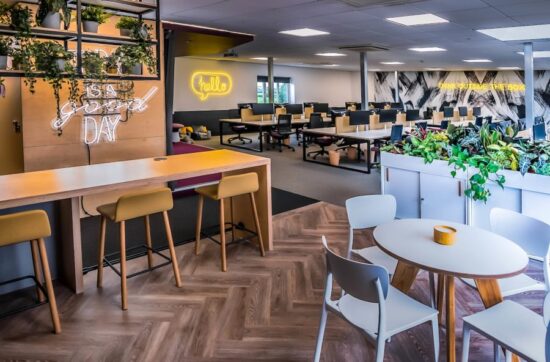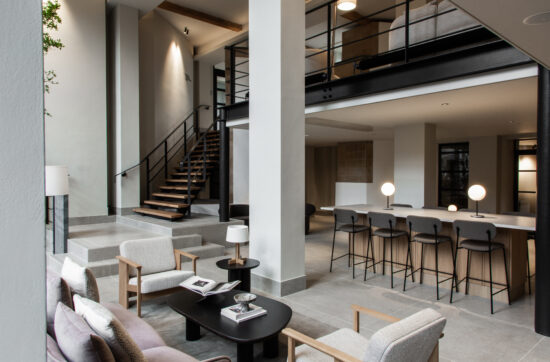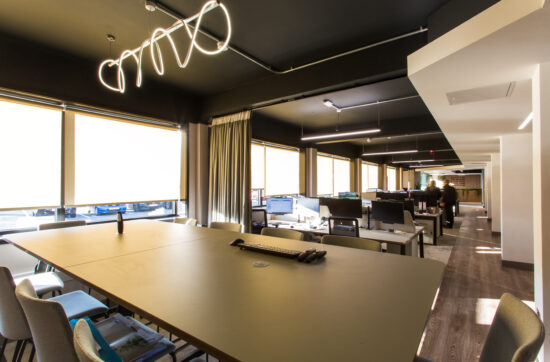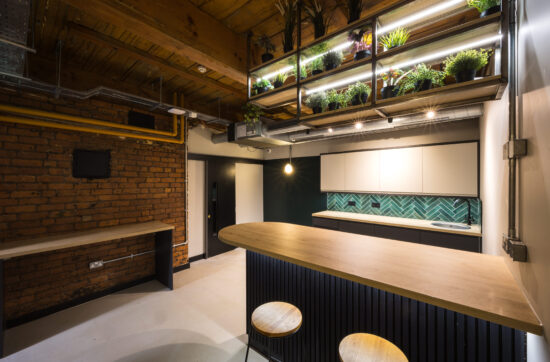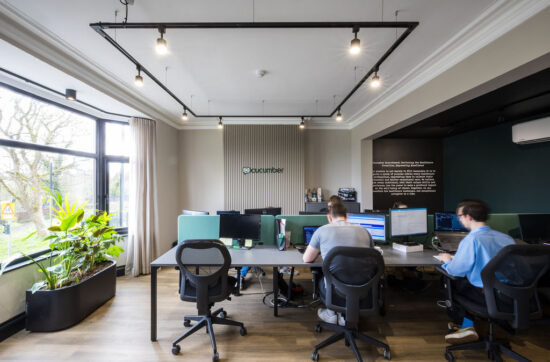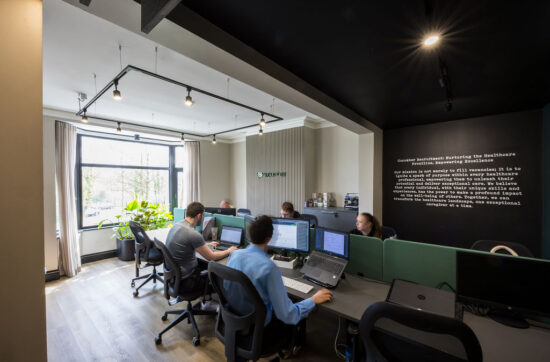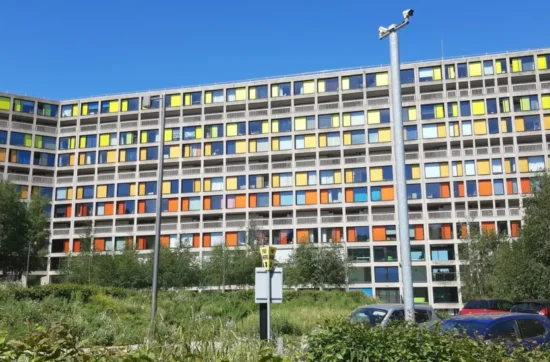

At Select Interiors, we believe a successful office should do much more than provide desks and meeting rooms. That thinking is reflected in the four pillars that underpin our approach to workplace design:
People. Place. Performance. Planet.
So, when comparing Cat A with Cat B, it is worth looking beyond the technical specification and considering what each level of fit out actually enables a business to achieve.
Insights
Select Interiors Office Fit Out Trends for 2026: Designing Better Workplaces Through the Four Pillars
The most successful office environments are designed around people, business performance, long-term adaptability and environmental responsibility. Rather than simply replacing finishes or increasing desk numbers, today’s workplace is a strategic tool that helps organisations attract talent, strengthen culture and improve productivity.
At Select Interiors, every office fit out is guided by our Four Pillars: People, Place, Performance and Planet. This evolution has led to one of the biggest trends shaping the commercial interiors industry: the ‘hotelification’ of the office.
The Four Pillars of Modern Office Fit Out Design
Businesses are no longer investing in office fit out projects simply to create places where employees sit and work. Today, the modern workplace must support collaboration, wellbeing, company culture, flexibility, and employee experience — all while reflecting a brand’s identity.
This evolution has led to one of the biggest trends shaping the commercial interiors industry: the ‘hotelification’ of the office.
3 Easy Wins to Incorporate Wellbeing into Workplace Design
A workplace that truly supports the wellbeing of its people must go beyond incorporating a few pot plants. The most successful office fit outs take a holistic approach, addressing both physical and psychological wellbeing to create environments where people feel comfortable, engaged, and empowered to perform at their best.
Office refurbishment trends for 2026
Office refurbishment in 2026 is about far more than aesthetics. From flexible layouts and wellness-led design to brand expression and sustainability, modern office refurbishment is focused on creating environments that support people: comfort, choice of setting, natural light and, crucially, a genuine reason to be there.
Workplace Design for People
For years, workplace design has been dominated by conversations about aesthetics, density ratios, and efficiency metrics. Yet despite beautifully finished offices and increasingly flexible WFH policies, many organisations continue to struggle with engagement, collaboration, and performance.
New Year, New Start? Moving Office Checklist
Plan your entire office move from start to finish with this definitive Moving Office Checklist. It guides you through each step of the planning process and is loaded with top tips for a successful relocation – from the planning and preparation, right through to the actual move-in day and beyond. Get things right from the start. There is a right way of planning an office move and this checklist will show you how.
Rethinking Design: The Evolution of the Office
A study by ISG, carried out in September 2024, found that those groups known as Millennials and Generation Z – in effect, people born between the early 1980s and 2010 – suffered the most from home working, with 32% saying that productivity had fallen and 62% citing poor home working conditions. The survey also found that employees would like to spend three days in the office to optimise productivity rather than the 2.5 days a week anticipated by employers. So, what does the office of the future look like?
Putting employee well-being first: a people-centred approach to office design
Wellbeing and mental health at work have been a prominent story in the media over the last few years. According to the Mental Health Foundation, 70 million workdays are lost each year in the UK due to mental health problems, costing employers approximately £2.4 billion per year. As a result, employee wellbeing and company culture have increasingly become an integral part of office design.
Considering Colour Thinking
Colour is all in the mind. It’s our brains response to the stimulus of light that causes this sensation that we call colour. Without life there is no colour. In this post we’d like to share our thoughts on how this phenomenon, colour, shapes the relationship we have with our built environment. So how as an industry can we can truly embrace the impact that colour has on us?