

- Carl Brown
- Design Trends, Office fit out, Office Fitting, Office Partitions
Office refurbishment in 2026 is about far more than aesthetics. From flexible layouts and wellness-led design to brand expression and sustainability, modern office refurbishment is focused on creating environments that support people: comfort, choice of setting, natural light and, crucially, a genuine reason to be there.
In 2026, refurbishing an office is no longer about refreshing finishes or squeezing more desks into the same footprint. It is about creating environments that support focus, collaboration, wellbeing and culture.
At Select Interiors, we are seeing office refurbishment briefs become more strategic, more human-centric and far more intentional. Below are the key office refurbishment trends shaping how workplaces are transforming the work experience.
Choice of setting replaces desk density
One of the biggest shifts in office refurbishment is moving away from desk density as the primary driver. The era of being chained to a workstation ended decades ago. Successful office refurbishment projects are now designed around how people actually use space, including:
• focused individual work
• collaborative problem-solving
• informal social interaction
• learning, mentoring and creative thinking
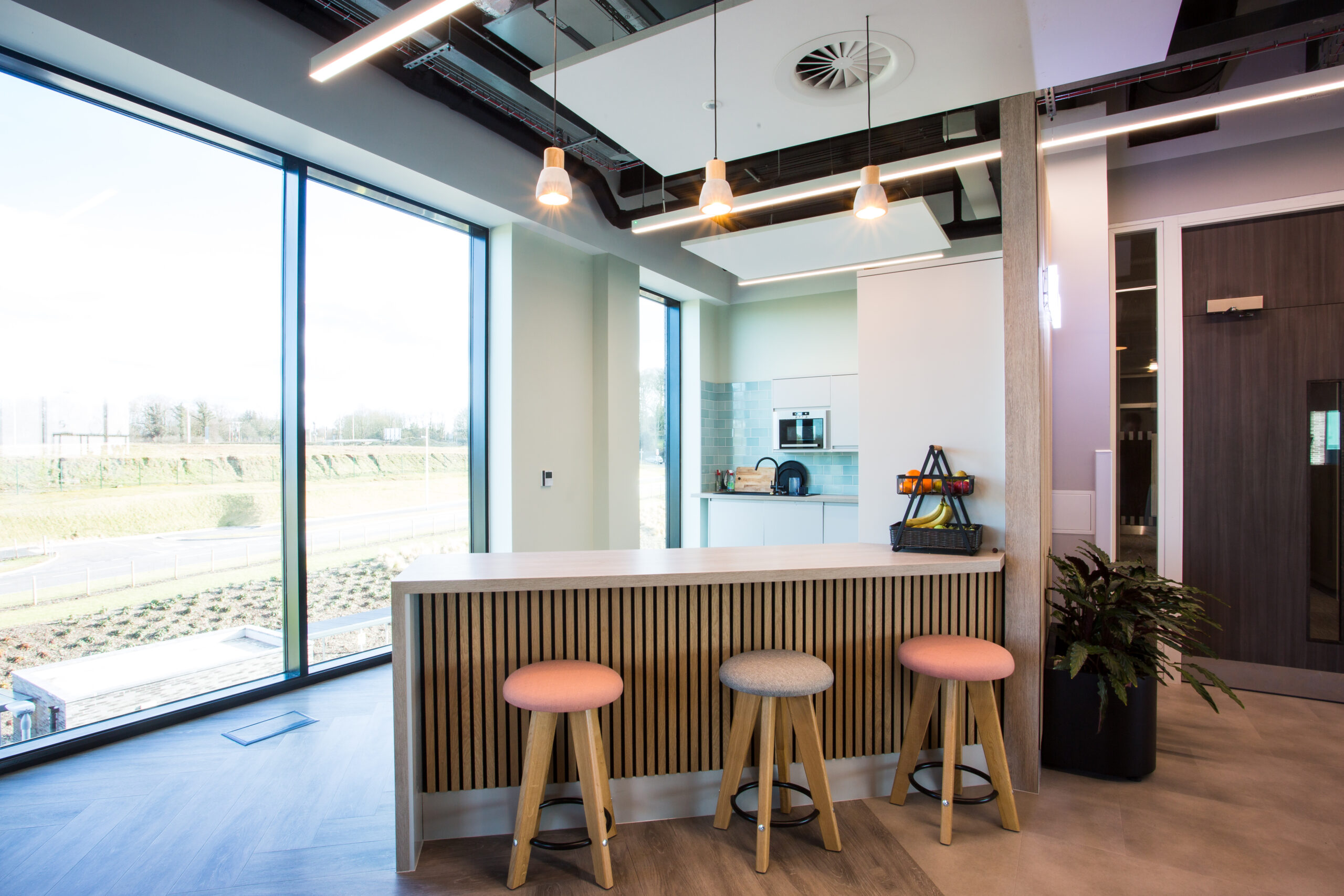
This leads to a richer mix of settings rather than sterile rows of identikit workstations. The office becomes a destination, not a default.
A well-considered office refurbishment asks not just why people should come into the office, but what the office can offer that working from home cannot. Choice, variety and social energy are central to that answer.
Flexibility and future resilience
Flexibility is a defining feature of office refurbishment in 2026 as hybrid working becomes embedded in workplace culture. Clients are seeking modular furniture, adaptable layouts, multi-purpose rooms, movable partitions and carefully planned acoustic zoning.
Spaces are designed to accommodate changing numbers as people flex between home and office. The goal is not constant reconfiguration, but future resilience. A well-designed office refurbishment allows a business to evolve without the need for another disruptive strip-out a few years down the line.
Wellness-led office refurbishment moves beyond biophilia
Biophilic design remains important, but office refurbishment in 2026 takes wellbeing much further. We are seeing greater emphasis on:
• acoustic comfort
• lighting that supports circadian rhythms
• improved air quality and ventilation
• organic materials that feel warm, tactile and calming
Wellness is less about visual statements and more about how a space feels to work in day after day. This quieter approach supports productivity, reduces fatigue and helps offices feel calmer, even when busy.
Colour, material and equilibrium
Colour, material and tone play a critical role in creating comfort and balance. A growing trend in office refurbishment is the use of a linked neutral base across the workplace, acting as an anchor that connects different zones.
Within this neutral framework, defined colour themes are introduced for departments or activity zones. Rather than bold contrasts, softer tones of a dominant colour are layered through fabrics, floor finishes and joinery, with accent colours used sparingly to complement rather than compete.
This approach creates visual interest without chaos. Colour supports wayfinding, brand identity and mood, rather than being applied purely for decoration.
Materials do much of the heavy lifting here. Timber, textured fabrics, recycled finishes and matt surfaces add depth and richness while maintaining a calm, considered atmosphere.
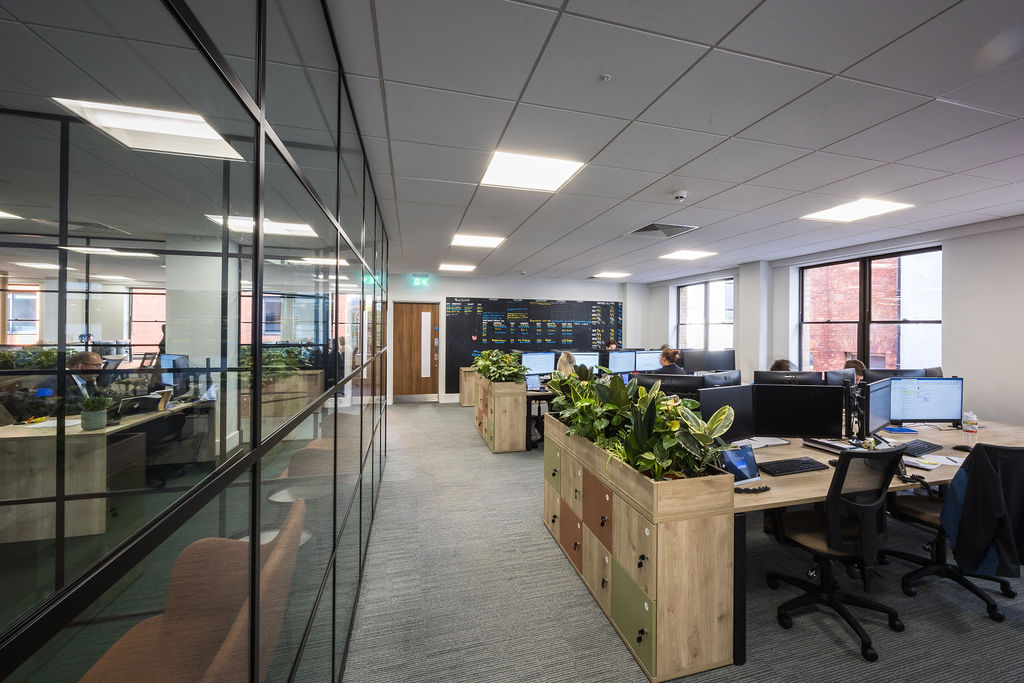
Office refurbishment as brand and culture expression
Office refurbishment is increasingly seen as a physical expression of brand and culture. Clients are asking important questions:
• Does this space reflect who we are?
• Does it reinforce our values?
• Does it tell a coherent story to staff and visitors?
This might be expressed through bespoke joinery, integrated graphics, spatial sequencing or the way people are welcomed into the building. When done well, office refurbishment becomes a storytelling tool that quietly reinforces culture every day.
Sustainability is no longer optional
Sustainability has moved from aspiration to expectation. In 2026, responsible office refurbishment considers:
• reusing and adapting existing structures
• selecting low-carbon and recycled materials
• designing for longevity rather than short-term trends
• minimising waste through smart planning and procurement
Clients increasingly want measurable impact rather than vague claims. A thoughtful office refurbishment balances environmental responsibility with performance, durability and aesthetics.
Technology becomes invisible, but more powerful
Technology plays a critical role in modern office refurbishment, but it is increasingly invisible. Smart booking and occupancy systems, intuitive AV, data-led lighting and integrated controls support collaboration without dominating the space.
When office refurbishment is done well, people do not notice the technology. They simply notice that everything works.
Inclusivity and choice shape refurbished workplaces
Modern refurbishment recognises that people work differently. Rather than a single ‘right’ way to work, refurbished offices now offer a spectrum of environments, including:
• quiet focus zones
• lively collaboration areas
• informal touchdown spaces
• retreat-style rooms for reflection or decompression
This variety allows people to choose what they need, when they need it. Inclusivity is designed into the layout from the outset, not added as an afterthought.
Why office refurbishment matters more than ever
In a competitive talent market, the office has become a signal. A well-executed office refurbishment says:
• we value our people
• we understand how work is changing
• we are investing for the long term
It is not about chasing trends. It is about creating workplaces that feel purposeful, comfortable and aligned with how people want to work now.
Frequently Asked Questions
What is the main focus of office refurbishment in 2026?
Experience-led, flexible and wellbeing-focused workplaces that support hybrid working and reflect brand culture.
How important is sustainability in office refurbishment?
Essential. Sustainable choices are now expected to be embedded in design, materials and delivery.
Does office refurbishment still need desks?
Yes, but desks are no longer the dominant feature. A balanced mix of work settings delivers far better outcomes.
Subscribe to our Newsletter
